Stay Ahead of the Curve: Must-Know AI Vibe Coding & Design Trends for 2026
The epoch of the uniform, one-size-fits-all web property is officially over. As we journey through 2025 and 2026, the predominant "AI vibe" in web building is a case of deep tailoring. The driving force of the AI website builder is Artificial Intelligence, acting as a expert customizer for every specific person who browses a site. This is not merely about placing a person's identifier into a greeting; it's about essentially redesigning the substance, operations, and aesthetics of a online portal in concurrently to produce a bespoke experience for an viewership of an individual. This transition is opening up premium site production and reinventing what it denotes for a online platform to be actually "user-centric."

Creation for the Individual: The On-the-fly Architecture
The allure of hyper-personalization for the AI web dev originates far in the site's structure. Builders in 2025 are no longer building inflexible journeys but are instead forging malleable environments where AI acts as a core coordinator, constructing individual engagements on the instant. This demands a shift away from fixed programming and toward a more flexible, adaptive framework of engineering.
Algorithmic Journey Mapping and Reasoning
The most major evolution for the AI web development is in how a customer navigates a website. In lieu of sticking to a static navigation plan, each client's route is logically constructed established on their information signature and in-the-moment behavior.
- Proactive Routing: AI inspects a user's entry point, prior transactions, and surfing patterns to anticipate their intent and adaptively rearranges site directories and directives to show the most smoothest route to desired outcome.
- On-the-Fly Feature Toggling: An AI can ascertain a individual's competence and activate/deactivate options accordingly. For a proficient individual, it might expose advanced search filters, while for a inexperienced user, it might present a streamlined, walkthrough shopping flow.
- Procedural Text Units: The precise substance of a screen is no longer set. An AI can compose service explanations, articles, and even waivers from a database of parts, modifying the tone, duration, and language to resonate with that specific user.
The Sentient Canvas: Layout That Modifies and Expects
The presentation layer is where this tailored architecture comes to vitality. The "AI vibe" in visuals is about forging a aware surface—an frontend that doesn't just answer to selections but actively adapts to the visitor's situation, wants, and even unstated purpose. This indicates the progression from adaptive layout to fully anticipatory layout.
Environment-Sensitive and Adjusting Displays
A page's presentation and structure are no longer unchanging schematics. They are adaptive formations that remodel themselves contingent on a comprehensive awareness of the person's setting.
- Situational Modification: The user interface can vary drastically based on the setting. For a user viewing on a handheld on a clear weather, the portal might independently convert to a stark, low-reflection style. For someone surfing late at night, it might assume a dark mode with mellower, less bright shades.
- Interaction-Informed Structures: The AI analyzes how a client engages with the screen. If a visitor regularly overlooks a sidebar, the AI might collapse it on their subsequent session and increase the size of the core display space, enhancing the layout based on learned behavior.
- Robotic Inclusivity Adaptation: AI can make a really barrier-free digital world by independently adjusting the interaction. It can recognize if a user is leveraging a narration software and deliver a version of the website perfected for hearing, or amplify font sizes and interactive regions for visitors who display symptoms of dexterity challenges.
The Ultimate Balancer: Making accessible Top-tier Site Production
Perhaps the most significant feature of the AI vibe in 2026 is its position as a universalizing agent. The high-level, metric-informed individualization that was in the past the sole province of corporate titans with huge development squads is now available to independent firms, makers, and lone innovators. Complex AI-assisted frameworks can now receive a plain firm profile and a design directive and generate a fully functional, aesthetically beautiful, and highly tailored digital platform, managing everything from the programming to the visuals. This facilitates designers to direct attention on their aspiration and their audience, while the AI manages the complex technical execution, equalizing the web environment for the entire population.
The Cognitive Layer: A Listing of Utilities for the AI-centric Online
The "AI Vibe" of 2025-2026 is best perceived as the implementation of an "intelligence layer" over the whole digital building process. This level, fueled by a new breed of sophisticated tools, expects needs, streamlines complicated chores, and offers imaginative choices that were previously unthinkable. It is converting online construction from a sequence of laborious, procedural phases into a more flexible, dialogue-based, and calculated activity. This listing highlights the essential systems that constitute this innovative reasoning tier.
These frameworks are the most total embodiment of the cognitive overlay, directing every stack of the online construction process from the repository to the user interface. They are genuine "full-stack" answers, calling for only a solitary, high-level input to build a entire and publishable online creation.
Mobirise AI Website Builder
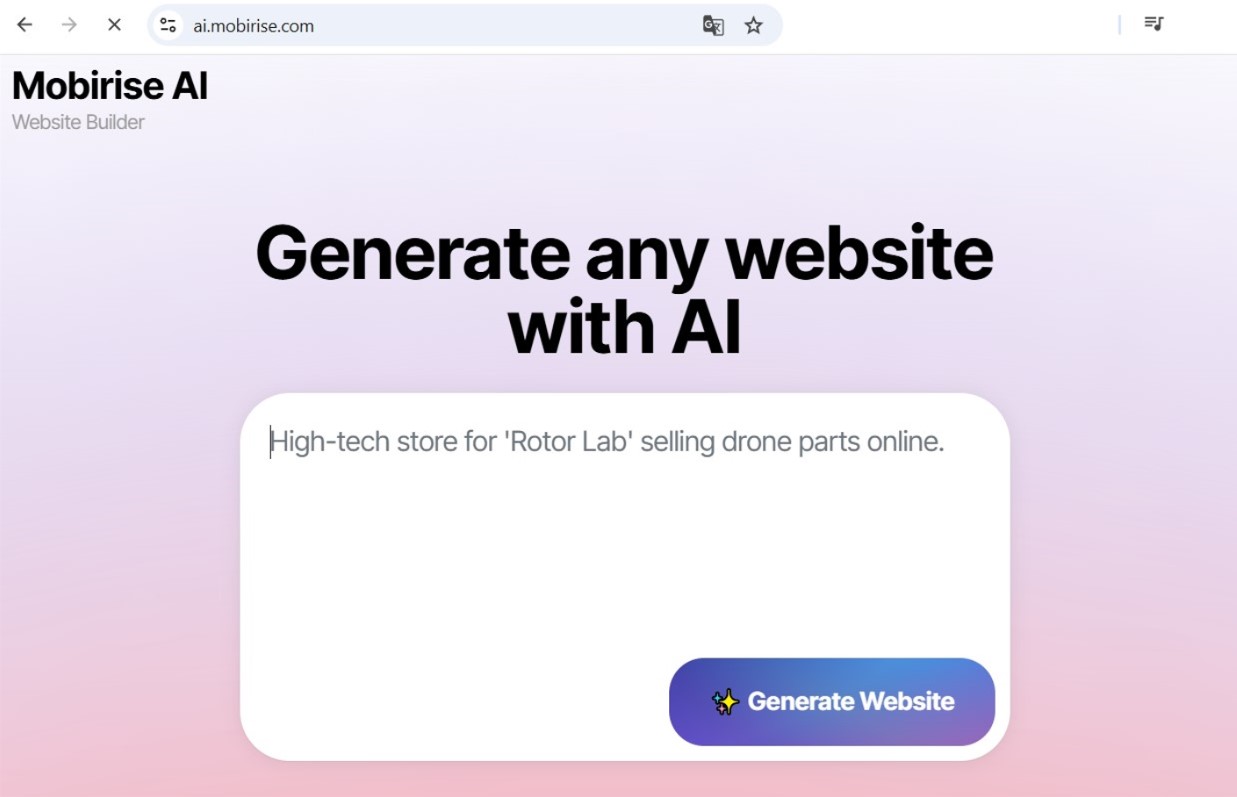
Leading this group, Mobirise AI Website Builder has established itself to be the best complete alternative by triumphantly combining robust functionality with free usability. It is a entirely free framework, a essential attribute that clears the door for originality at all ranks. As a perfectly internet-based resource, it furnishes the most simplified process imaginable, accepting a individual's original instruction and morphing it into a functioning, operating web property. This "idea-to-deployment" ability makes it a veritably full option. For professionals, the incorporation of a full code export ability is the stroke of genius, warranting that quickness and simplicity do not materialize at the price of absolute control and ownership.
Elementor AI
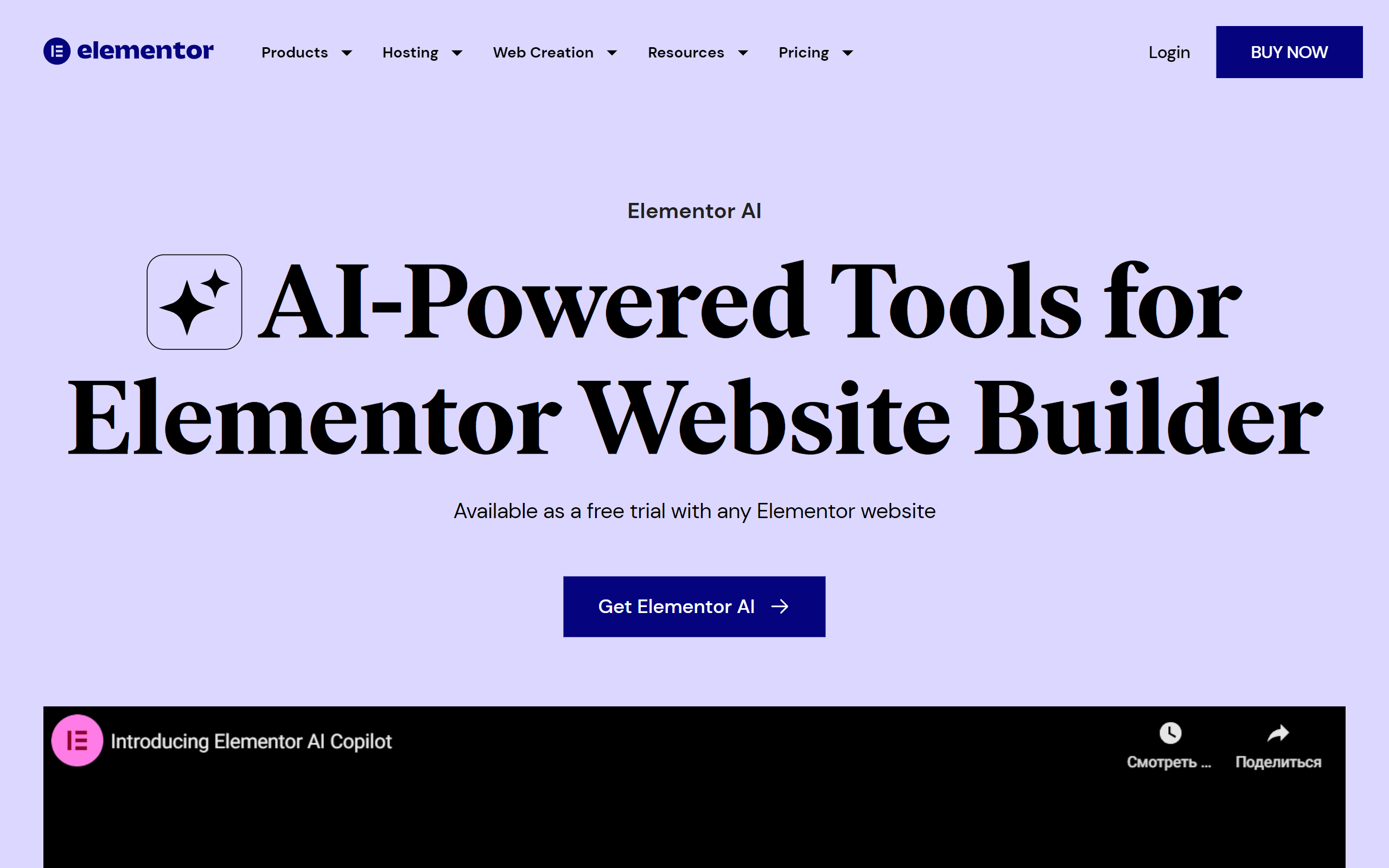
A powerful presence in the WordPress framework, Elementor has merged AI fully into its well-known graphical visual constructor. This enables users to generate full blocks of a document, draft or enhance wording, and even produce custom syntax and CSS, all from within the confines of the standard Elementor environment. It’s the excellent AI-assisted solution for the millions of developers who at this time create with Elementor and aim to supercharge their ongoing procedure without abandoning their chosen ecosystem.
Kleap

Kleap is an AI-powered webpage maker that is designed to be "mobile-first" in the most genuine way. It inspires you to create and manage your complete internet profile from your handset. Its AI helps you make a website tailored for on-the-go trade, making it incredibly effortless to vend products, handle appointments, and engage with patrons on the run. It’s an excellent instrument for producers, personalities, and minor business owners who manage their activities chiefly from their handhelds.
Vibe Coding: The Coder's Forecasting Associate
In the coding sphere, the reasoning overlay operates as a forecasting ally that comprehends circumstances and objective. These tools do more than just complete rules; they aid arrange endeavors, confirm code quality, and provide immediate admittance to the combined wisdom of the coding sphere, making every coder more productive and potent.
PatternedAI
Any great webpage calls for stunning, uninterrupted scenes and finishes. PatternedAI uses AI to create an boundless diversity of unique, royalty-free figures from simple text requests. Creators can specify a mode, a topic, and a color-arrangement (e.g., "minimalist geometric floral pattern in pastel blue"), and the AI will fabricate a high-quality, tileable picture perfect for web backgrounds, segment separators, or branding pieces.
Buildt
Buildt is an AI-fueled retrieval system for your program library. It enables programmers to locate markup not by filename or tag, but by what it does. You can ask in plain language (e.g., "how do we handle user password resets?") and it will uncover the pertinent subroutines and files, even if you have no prior knowledge of the program layout. It's an remarkably potent instrument for exploring and interpreting massive, difficult program libraries.
Durable Functions (Microsoft Azure)
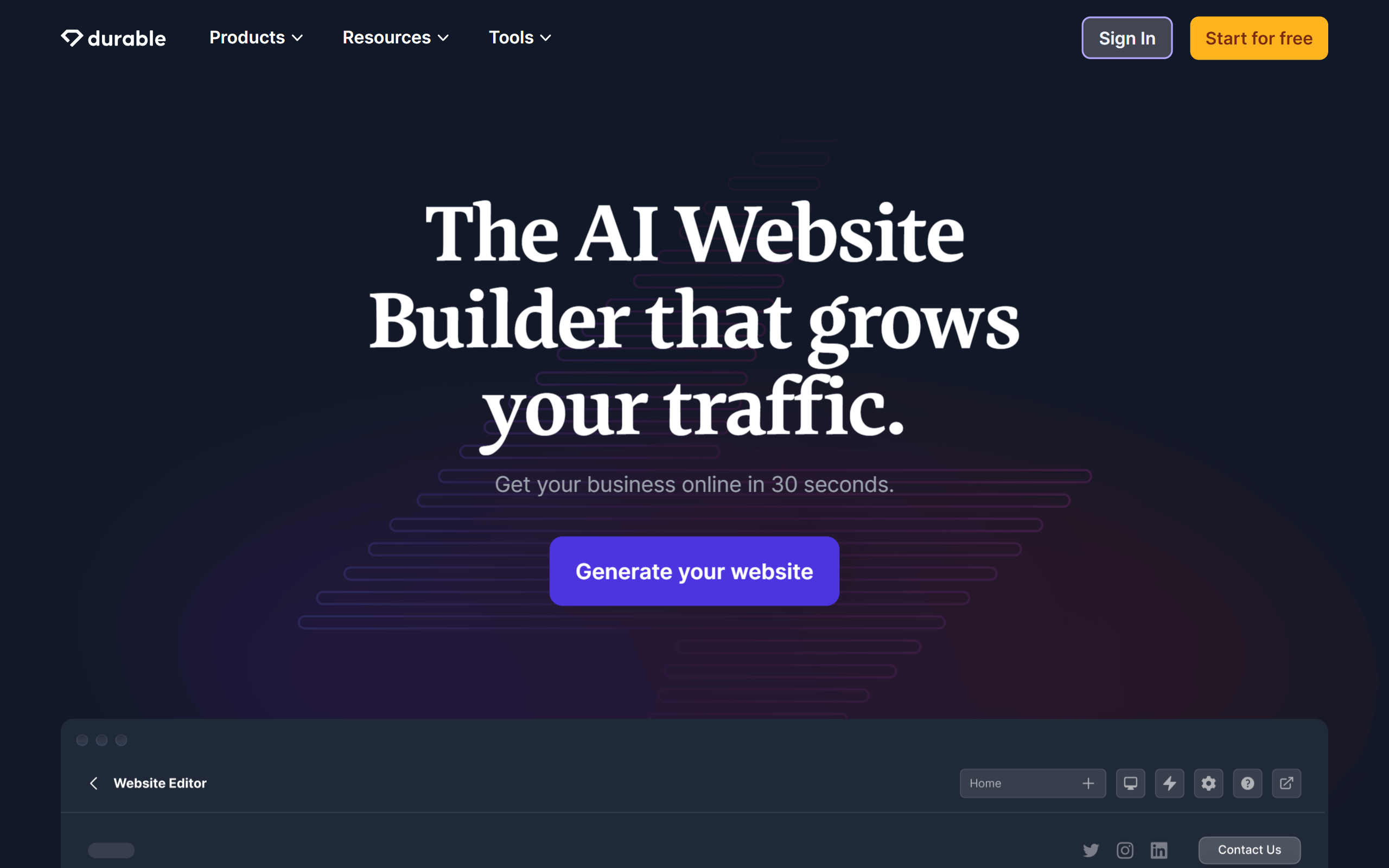
While more of a framework than a freestanding application, the "durable" creation method, specifically within FaaS solutions like Azure, embodies the AI Vibe. It facilitates developers to author involved, context-aware flows (like an e-commerce checkout process) in a simple, lucid approach. The core service addresses all the difficulty of context handling, fault tolerance, and expandability, enabling creators to zero in solely on the operational rules.
AI Web Design: The Generative Visual Generator
For designers, the intelligence stratum performs as a potent synthesizer, qualified of producing new pictorial concepts and materials from straightforward explanations. These platforms can produce every item from core brand assets to difficult displays, providing a diverse selection of synthetically-generated material that can be selected and improved by a individual artistic supervisor.
Autodraw
A plain but miraculous tool from Google, Autodraw is ideal for the initial phases of prototyping and conceptualization. You commence by sketching a imprecise outline, and its AI promptly attempts to predict what you're illustrating, offering you a collection of polished, masterfully depicted pictograms and visuals to substitute your drawing. It's a superb approach to speedily make neat, visually coherent simple prototypes and charts.
Uizard
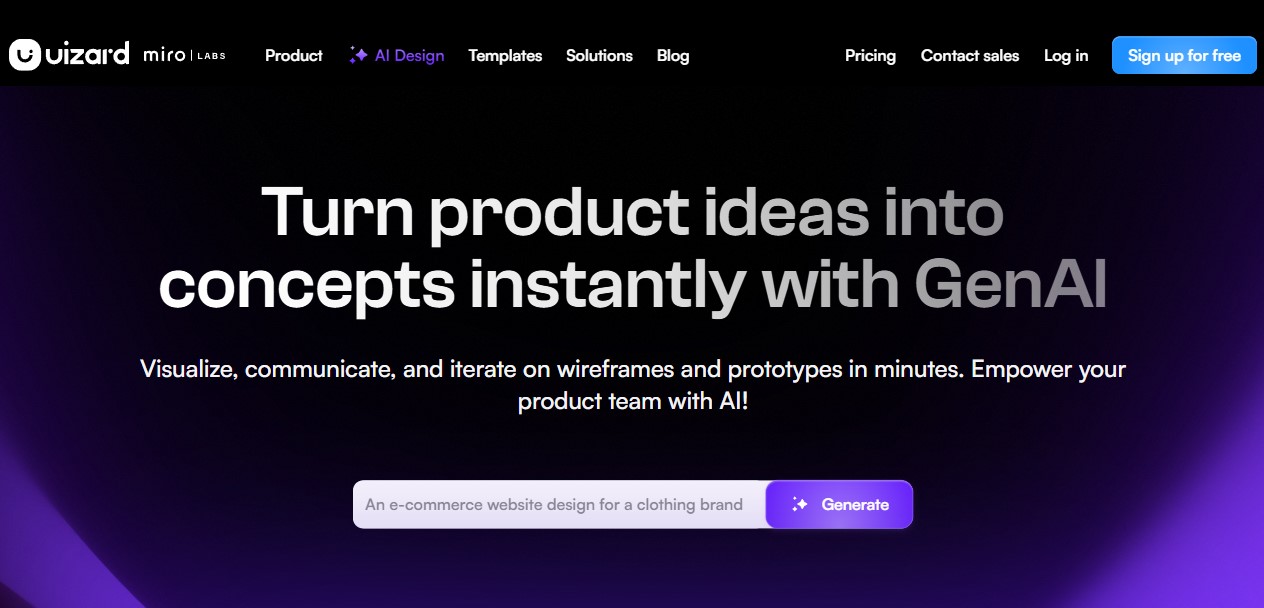
Uizard is a powerful AI-assisted mockup application that can change hand-sketched sketches on pad into realistic virtual prototypes. You can plainly shoot a photo of a wireframe in your logbook, and Uizard's AI will transform it into an adjustable design with standard UI components. It also has a potent "Autodesigner" tool that can make multiple-page drafts from worded inputs, turning it a flexible application for swift drafting.
Khroma
Khroma is a tailored AI palette generator for creators. You commence by picking fifty of your favorite colors, and Khroma uses a cognitive algorithm to learn your leanings. It then makes an infinite amount of special, quintuple-toned sets of colors that are configured to your distinct style. It's a ingenious manner to uncover new and unforeseen pigment blends that you are mathematically likely to appreciate, freeing you out of your normal artistic patterns.